Trying to decide between a condo and a townhome in Newport Beach? You’re not alone. With waterfront living on the Peninsula and quieter, larger options near Dover Shores, the right choice comes down to how you want to live, what you want to maintain, and how you plan to finance and insure your purchase. In this guide, you’ll learn the real differences that matter in coastal Orange County, from legal ownership and HOA responsibilities to lifestyle trade-offs and resale factors. Let’s dive in.
What a condo means here
A condominium is a unit in a common interest development. You typically own the interior airspace of your home and share ownership of common areas like the building exterior, land, parking, and amenities. The development is governed by recorded CC&Rs and California’s Davis‑Stirling Act.
In Newport Beach, many attached homes along the Peninsula and in Dover Shores‑adjacent pockets follow this model. The legal structure influences what you can change on the exterior, how you insure the property, and how lenders underwrite your loan. Expect the HOA to set rules on alterations, parking, and community standards.
The key takeaway: a condo’s shared structure often means less exterior maintenance for you but more community oversight and project‑level lending requirements.
What a townhome really is
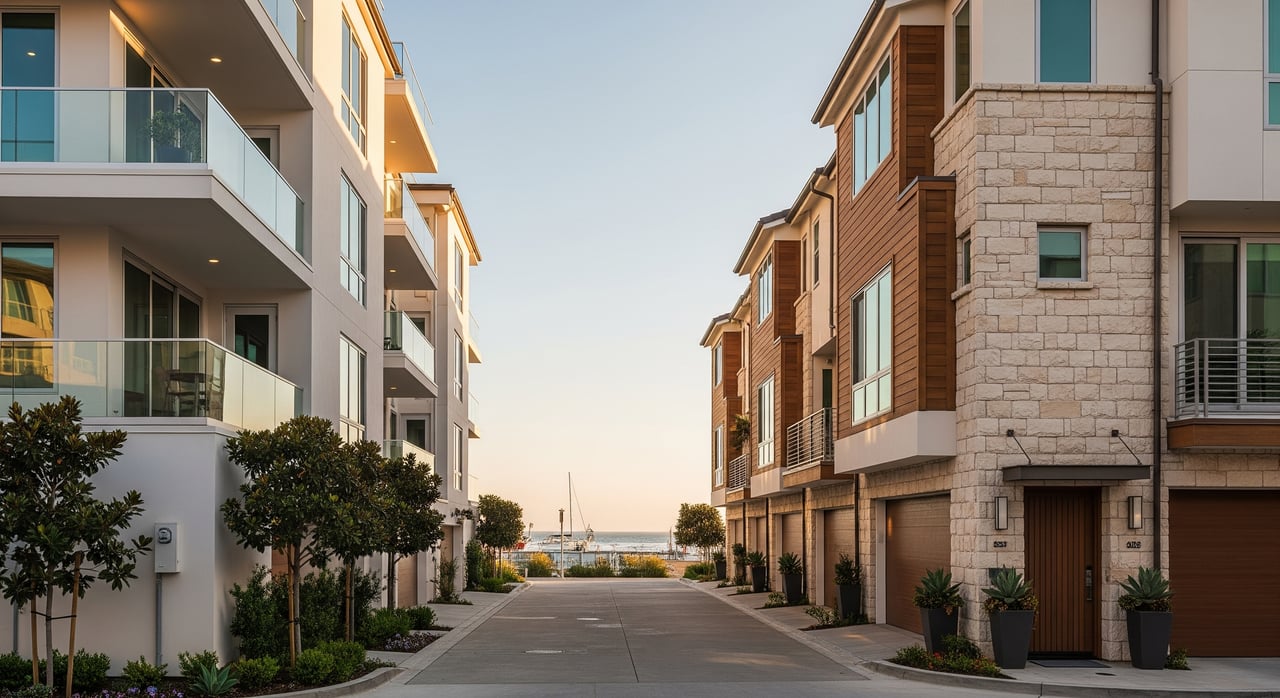
Townhome usually describes a multi‑level attached home with a private entry and often a private garage. Legally, though, it can be either a condominium or a fee‑simple home within a planned unit development. In a fee‑simple townhome, you typically own the land beneath the unit and sometimes small yard areas, while still sharing common spaces under CC&Rs.
Here’s the critical detail: the label “townhome” does not guarantee fee‑simple ownership. In Newport Beach, some newer infill townhomes are fee‑simple PUDs, but many attached townhomes are legally condos. Always confirm the legal description in title and HOA documents.
The key takeaway: verify whether the property is a condo or fee‑simple PUD. Ownership form affects taxes, financing, insurance, and what you can modify.
HOA and maintenance basics
HOA responsibilities vary by community documents, but these patterns are common. Always review the CC&Rs and budget to confirm.
Typical condo split
- HOA usually maintains exterior building elements, roof, common walls, exterior paint or siding, shared utilities, landscaping, and amenities.
- You typically maintain interior finishes and systems, such as flooring, cabinetry, and fixtures. Balcony and window responsibility varies by project.
Typical fee‑simple townhome split
- You often maintain the roof, exterior side walls, and any limited private yard or walkway. The HOA tends to manage common landscaping, community fencing, and amenities.
- Some townhome projects resemble condos in practice, with the HOA covering more exterior items than you might expect.
Operational items to review
- Reserve health: Does the HOA have a recent reserve study and sufficient reserves for roofs, exterior, paving, or elevators?
- Special assessments: Are any planned? A history of frequent assessments can indicate future costs.
- Management: Professional management can improve responsiveness and documentation. Self‑managed associations vary widely.
- Utilities: Clarify what your dues include and which services are billed separately.
Insurance responsibilities
- Master policy: Determine whether the HOA’s master policy is walls‑in or bare‑walls. This affects your HO‑6 coverage for interior finishes and improvements.
- Gaps to cover: Personal property, loss assessment, and interior upgrades are usually on you. In coastal Newport Beach, separate flood and earthquake coverage are common considerations.
Red flags in documents
- Low reserves, frequent or large special assessments, pending litigation, unclear maintenance responsibilities for balconies or roofs, strict rental limitations, or overbroad alteration restrictions.
Financing in coastal communities
Financing an attached home here can be more complex than a detached home. Project approval, loan type, and price points all play a role.
- Project approval: FHA, VA, and conventional agencies apply project eligibility rules for condo communities. Townhomes within a PUD may face fewer project‑level hurdles but are still underwritten closely.
- Lender overlays: Even if a project is not on an agency’s approved list, some lenders may finance with added requirements such as larger down payments or higher reserves.
- Conforming vs jumbo: Many Newport Beach purchases exceed conforming loan limits, so jumbo standards often apply. Expect tighter credit, reserve, and debt‑to‑income guidelines.
- Competitive realities: Cash and strong down payment offers are common in high‑demand areas. Be prepared with documentation upfront.
Practical lender checkpoints
- Ask early whether the specific project is agency‑approved and what owner‑occupancy or budget requirements apply.
- Expect your lender to request HOA financials, CC&Rs, insurance declarations, and meeting minutes.
- Verify HOA reserves and insurance adequacy, as these can influence approval and rates.
Insurance and coastal risk
Insurance is different at the beach. Lenders and insurers look closely at flood exposure, building age, and maintenance.
- Flood risk: Many areas are in or near mapped flood zones. Your lender may require flood insurance, and premiums vary by elevation and building characteristics.
- Earthquake coverage: Standard policies typically exclude earthquake, so separate coverage is often considered in California.
- Master policy scope: Confirm whether the association’s policy is walls‑in or bare‑walls and what the deductible is. Understand loss assessment exposure.
- Salt air exposure: Coastal conditions can accelerate wear on metal, paint, and windows, influencing maintenance and sometimes premiums.
Lifestyle trade‑offs by neighborhood
Choosing between a condo and a townhome in Newport Beach often comes down to lifestyle and routine.
Why a condo might fit
- You want reduced exterior maintenance and predictable dues that cover building upkeep and amenities.
- You value a lock‑and‑leave setup for a second home or a travel‑heavy schedule.
- You plan to enjoy shared features like a pool, gym, or security.
Why a townhome might fit
- You prefer a private entry and attached garage that feel closer to a single‑family home.
- You want more autonomy over a small yard or patio and potentially greater interior volume.
- You like more separation across multiple levels for work, guests, or hobbies.
Newport Beach specifics
- Parking premium on the Peninsula: Confirm assigned spaces, garage access, and guest parking. Street parking rules vary and can affect daily life.
- Waterfront proximity: Views and water access command premiums. Exterior modifications may be limited by CC&Rs and coastal rules.
- Seasonal noise: Peninsula living offers energy and convenience, while Dover Shores‑adjacent areas often feel quieter with larger footprints.
Resale drivers to watch
Resale value here is shaped by location, functionality, and project health.
- Location and access: Proximity to beaches and harbor, plus secure, deeded parking and storage, are major draws.
- Outdoor space: Private patios, balconies, or small yards add day‑to‑day livability.
- Interior presentation: Updated kitchens and baths, natural light, and efficient layouts help listings stand out.
- Rental rules: HOA and city rules commonly restrict short‑term rentals. Understand minimum lease terms and any caps on rentals.
- Project stability: Solid reserves, no litigation, and healthy owner‑occupancy can improve financing options and buyer confidence.
Search smart on the MLS
Small tweaks to your search will make results more accurate.
- Property type: Search both Condominium and Townhouse or Attached categories. When a listing is marked Townhouse, verify the legal form in title.
- Filters to use: Bedrooms, baths, square footage, parking spaces and garage type, HOA fee range, waterfront or beach‑adjacent tags, year built, and attached vs detached.
- Keywords to try: Fee simple, PUD, condominium, deeded parking, balcony, private garage.
- Map focus: Draw polygons around Balboa Peninsula, Lido, West Newport, and Dover Shores‑adjacent neighborhoods to match your lifestyle goals.
Due diligence checklist
Before writing an offer or removing contingencies, review these items carefully.
- Title report confirming legal form: condo unit or fee‑simple parcel
- CC&Rs, Bylaws, and Rules: use restrictions, alteration policies, pet and rental rules
- HOA budget, reserve study, and recent financials
- Association meeting minutes for the last 12–24 months
- Master insurance declarations: coverage type, deductible, loss assessment
- Disclosures on special assessments and any pending litigation
- Occupancy ratios and owner‑tenant mix if using FHA or VA financing
- Physical inspection focused on exterior envelope, balconies, roofs, common plumbing and electrical, garage doors, and windows
When each option makes sense
If you prioritize ease, predictability, and shared amenities, a condo may be the right fit. You’ll likely trade some autonomy for lower exterior responsibilities and community features.
If you want a home that feels closer to a single‑family residence with a private entry and garage, a townhome can be ideal. Just confirm the legal form, since fee‑simple ownership often gives you more control and different maintenance obligations.
Your next step
Choosing well in Newport Beach starts with clarity on ownership, HOA health, financing paths, and daily lifestyle. If you want a tailored shortlist and guidance on project documents, reserves, and insurance considerations, let’s talk. You’ll get local insight grounded in real transaction experience across the Peninsula and Dover Shores‑adjacent neighborhoods.
Ready to compare handpicked options and move with confidence? Connect with Vanessa Moore for a focused, concierge‑level search in Newport Beach.
FAQs
What is the legal difference between a condo and a townhome in Newport Beach?
- Townhome describes the style, not the legal structure. It can be a condo or a fee‑simple parcel within a planned unit development, so always verify via title and HOA documents.
How do HOA responsibilities differ between condos and townhomes?
- Condos often have the HOA covering exterior elements and common areas, while owners handle interiors. Fee‑simple townhomes commonly require owners to maintain roofs and exterior walls, but project documents control the exact split.
How does financing work for attached homes near the beach?
- Condos may require project approval under agency rules, while fee‑simple townhomes can face fewer project hurdles. Many Newport Beach purchases use jumbo financing, so expect stricter underwriting and documentation.
What insurance should I plan for in coastal Newport Beach?
- Plan for an HO‑6 for interior coverage, plus consider flood and earthquake policies as needed. Verify whether the HOA’s master policy is walls‑in or bare‑walls and understand the association deductible and loss assessment exposure.
What affects resale value for condos and townhomes in Newport Beach?
- Proximity to water, secure and deeded parking, private outdoor space, updated interiors, rental rules, and the HOA’s financial strength are consistent drivers of marketability and value.