Which Orange County waterfront views hold long-term value for buyers?
Not all waterfront premiums are created equal in Orange County. Oceanfront and unobstructed harbor views in markets like Newport Beach and Corona del Mar tend to hold value best because they combine genuine scarcity with protected sightlines that can't be built away. Partial views, canyon-facing lots, and marina-adjacent properties can still carry premiums, but those premiums are more exposed to erosion over time as development and landscaping change the visual corridor.
Key Takeaways
- Recent local market data puts the Newport Beach median sale price at $3,800,000 and Newport Coast at $8,800,000, with median days on market of 29 and 49 respectively, reflecting the premium coastal market commands.
- Unobstructed oceanfront and harbor views in Orange County hold value best when the sightline is legally protected or physically permanent, not just currently unblocked.
- Ocean view and bay view properties in Newport Beach and Corona del Mar carry the strongest documented scarcity, which is the core driver of a durable premium.
- Buyers should evaluate whether a view is protected by zoning, deed restriction, or topography before paying a premium, since an obstructable view can lose meaningful value when a neighbor builds or plants.
- The countywide median home value reached approximately $1.19 million as of June 2026, according to Zillow, underscoring how far above market waterfront coastal properties trade.
How do different waterfront view types compare in Orange County?
This is the question I get most often from buyers considering a premium coastal purchase, and the honest answer is that the view type matters less than the permanence of the view. Here's how I think about each category.
Oceanfront and bluff-top views
True oceanfront, meaning a property with no street or structure between the home and the water, is the scarcest category in Orange County. In Laguna Beach and Newport Beach, the oceanfront inventory is finite and essentially non-replicable. Bluff-top properties in Corona del Mar and Laguna Beach carry similar scarcity logic: the topography itself protects the view corridor. These are the premiums I'm most confident will hold.
The risk factor is coastal regulation and erosion, which can affect what you can do with the property. That's a separate underwriting question, but it doesn't diminish the demand side of the equation.
Newport Harbor and bay views
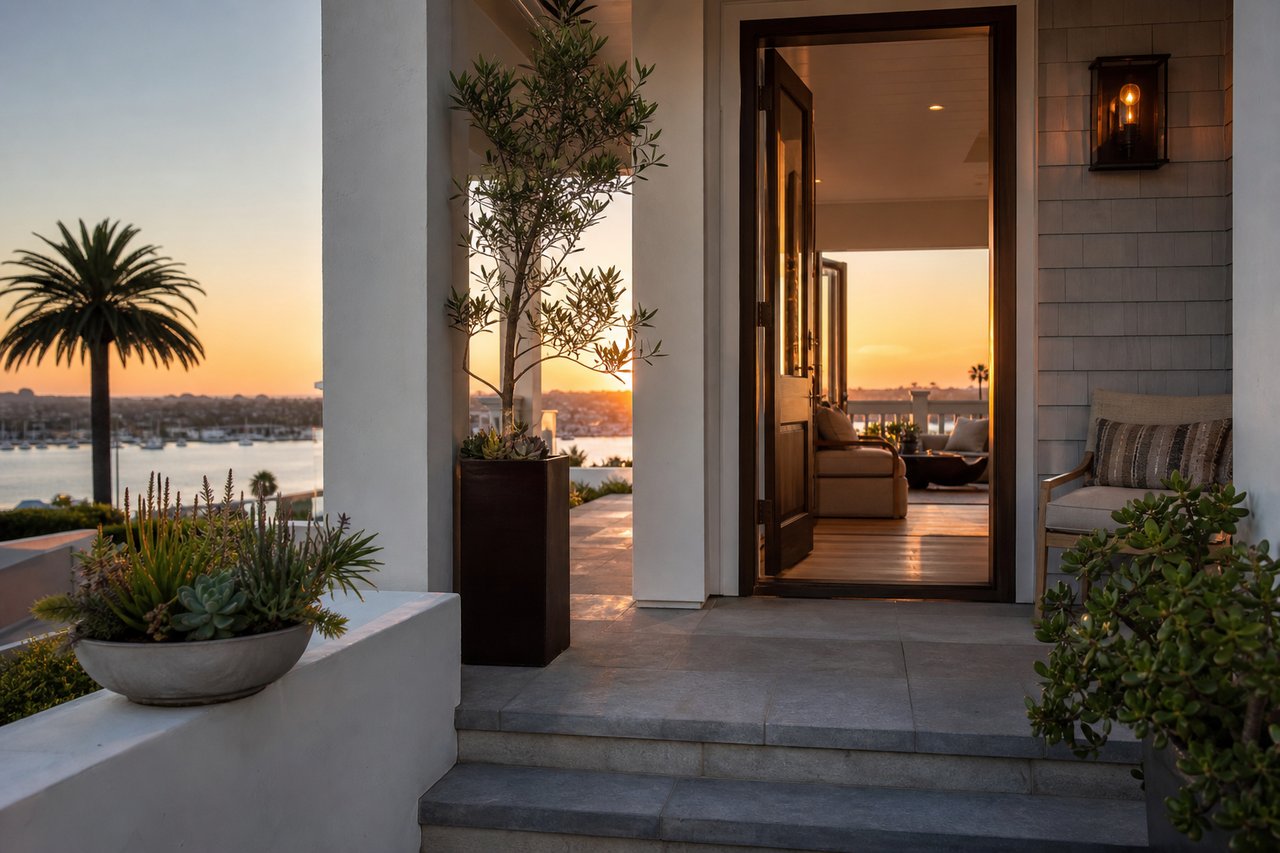
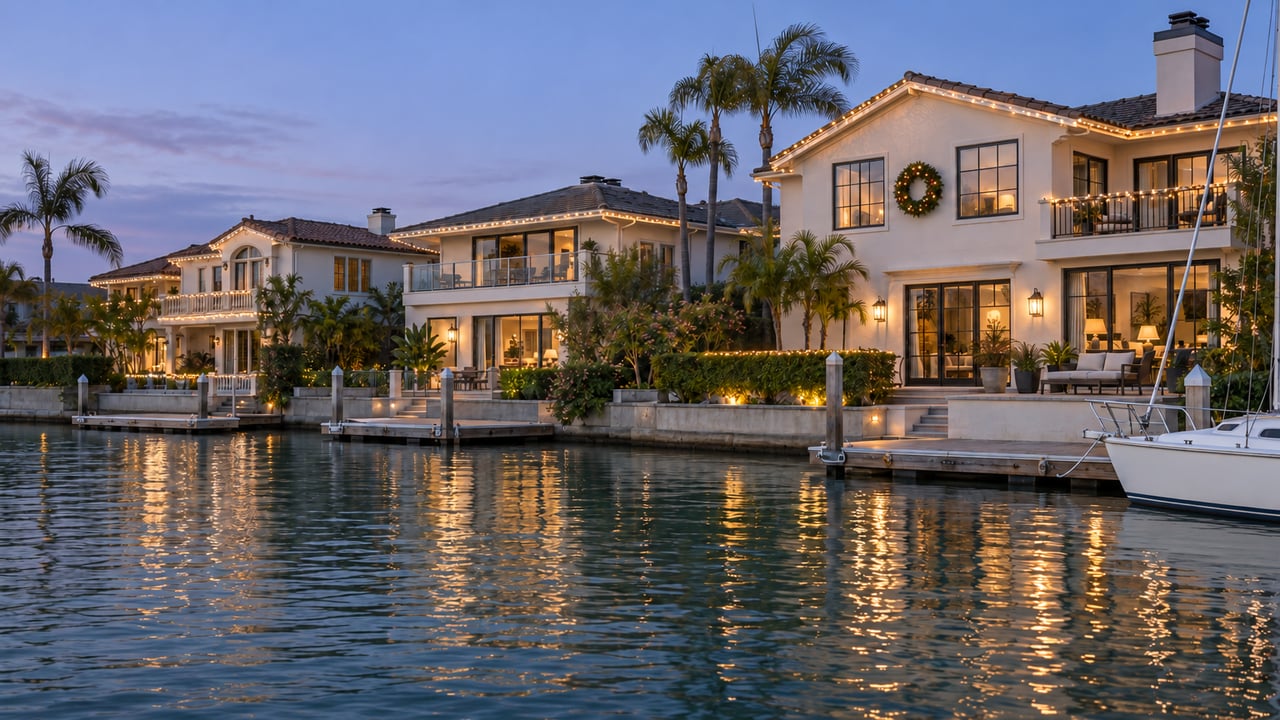
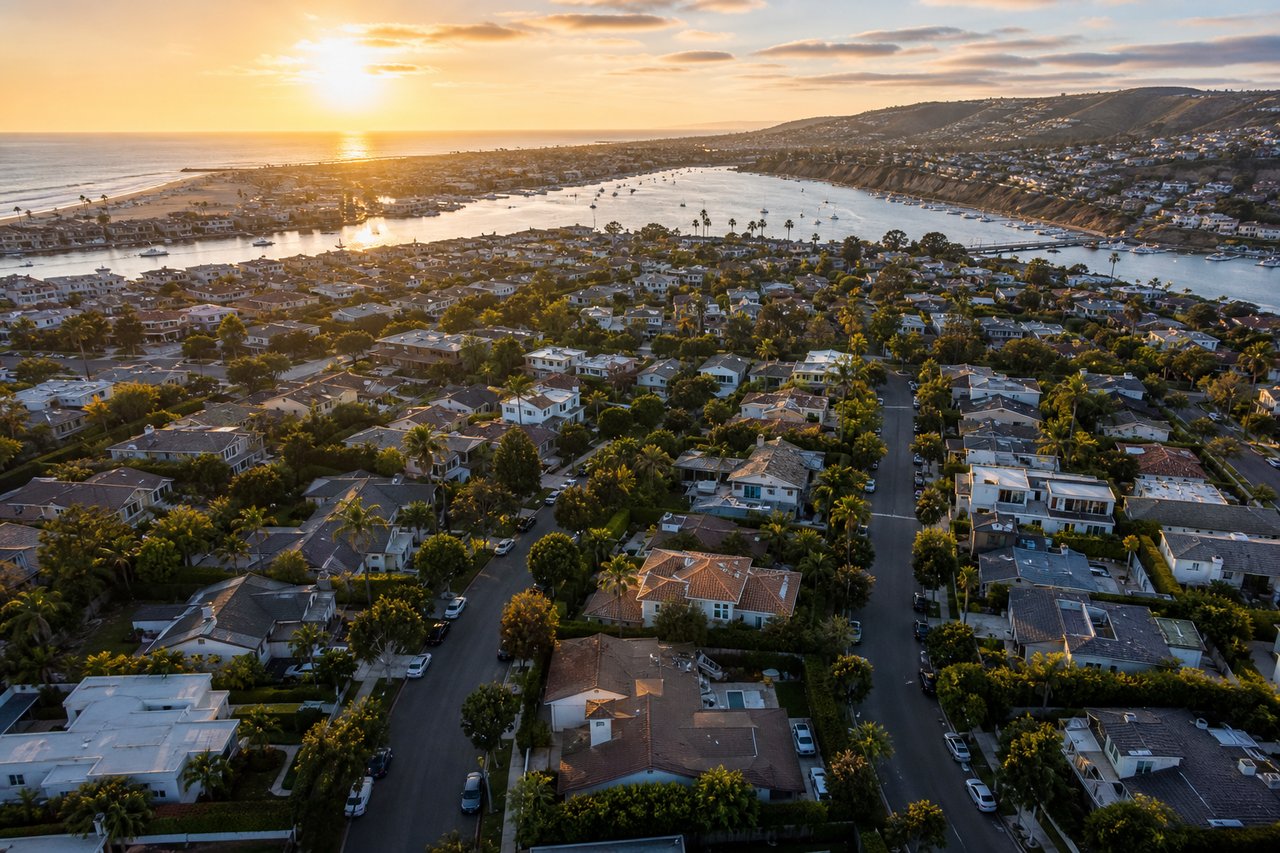
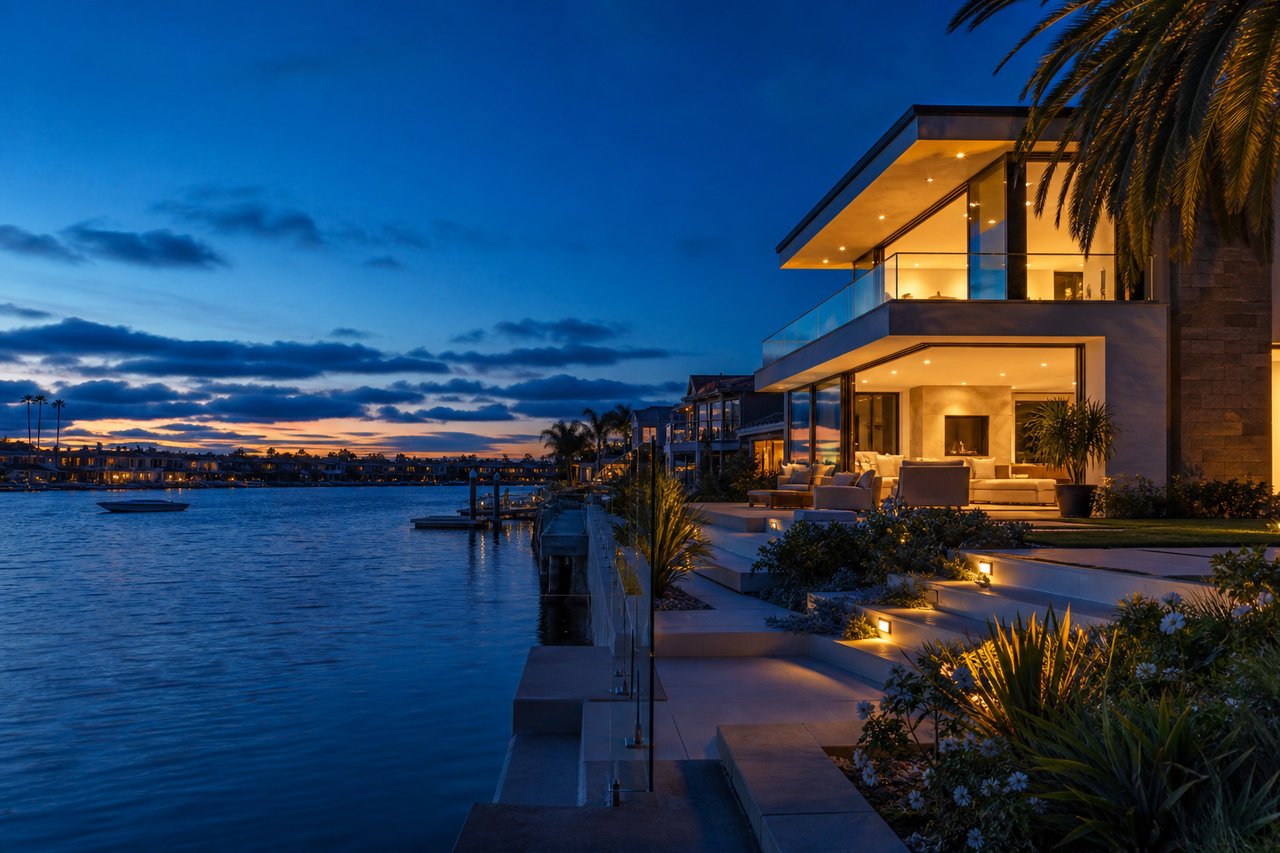
Newport Harbor is one of the largest small-craft harbors on the West Coast, and harbor-facing properties on Balboa Island, Lido Isle, and the Balboa Peninsula have a different premium profile than oceanfront. The water is calmer, the lifestyle is boat-oriented, and the views are animated by activity rather than pure horizon. According to NAR research, waterfront properties nationally command meaningful premiums over comparable inland homes, and in Newport Harbor that dynamic is amplified by the harbor's contained geography.
The key question for harbor views: is the view across open water, or across a channel that could eventually be developed or docked over? Open-water harbor views, particularly those facing the main channel or the open bay, are more durable than slip-adjacent or marina-side views where the visual field is more variable.
Canal, lagoon, and lake-adjacent properties
Huntington Beach's canal-front homes and the Bolsa Chica area offer a different value proposition. The premium is real, but it's more modest and more sensitive to the surrounding neighborhood context. These properties tend to attract buyers who want the waterfront lifestyle at a lower absolute price point. The most recent county-level market data shows a countywide median around $1.2 million, up 3.2% year over year, and Huntington Beach's median sits at $1,375,000 in recent local data, which tells you the premium over the county baseline is present but not dramatic in those submarkets.
Long-term value here depends heavily on what surrounds the water. A protected natural lagoon holds value differently than a man-made canal in a dense residential grid.
Partial and "peek-a-boo" views
I coach buyers to be especially careful here. A partial ocean view that exists because a neighbor hasn't built up yet is not the same asset as an unobstructed view protected by topography or a deed restriction. Before you pay a premium for a partial view, I want to understand exactly what's between you and the water, whether that can change, and what the zoning allows on adjacent parcels. An obstructable view is a depreciating asset the moment something is built in front of it.
What drives a durable waterfront premium in Orange County?
After working with buyers across Newport Beach, Corona del Mar, Laguna Beach, and the coast for years, I've come to think about durable premiums through three lenses: scarcity, permanence, and lifestyle alignment.
Scarcity
The oceanfront lots in Corona del Mar and Laguna Beach are not being created. Neither are the harbor-front parcels on Lido Isle. When supply is genuinely capped, demand pressure over time tends to preserve and grow the premium. The off-market segment of coastal Orange County is a direct reflection of this scarcity: owners of genuinely irreplaceable waterfront properties often don't need to list publicly to find a buyer.
Sightline protection
A view is only as durable as the protections around it. Coastal Commission jurisdiction, local height limits, and deed restrictions all factor into whether a view corridor will still be intact in 10 or 20 years. Newport Beach zoning has specific provisions that affect what can be built in view corridors, and understanding those rules before you offer is part of the due diligence I walk every waterfront buyer through.
Lifestyle alignment
This is less quantifiable but just as real. A harbor view commands a premium because buyers want to be on the water, near their boats, and in the social fabric of the harbor community. That demand is structural, not cyclical. An ocean view in Laguna Beach commands a premium because the visual and emotional experience of that specific view is what the buyer is purchasing. When the lifestyle demand is deep and consistent, the premium is sticky.
Here's a current look at median sale prices across the coastal submarkets I work in, based on recent local market data (trailing approximately 90 days, as of September 2026):
Area | Median Sale Price | Median Days on Market |
|---|---|---|
Newport Beach | $3,800,000 | 29 |
Newport Coast | $8,800,000 | 49 |
Corona del Mar | $4,300,000 | 49 |
Costa Mesa | $1,437,500 | 48 |
Laguna Beach | $3,350,000 | 46 |
Huntington Beach | $1,375,000 | 23 |
Irvine | $1,445,000 | 19 |
Coto de Caza | $1,790,000 | 50 |
These are area-level medians. An individual waterfront home's value depends on its specific view, orientation, condition, lot size, and street, and the premium above these medians for a true oceanfront or harbor-front property can be substantial. The only way to understand where a specific property sits relative to these benchmarks is to run a targeted comparable analysis, which is exactly what I do before advising any buyer on an offer.
Waterfront and view premiums are real, but I always coach clients on which views actually hold value long-term versus which ones fade. The difference between a property that appreciates into its premium and one that doesn't often comes down to details a surface-level search won't surface.
What should waterfront buyers know about closing costs and transaction friction?
Buying at the premium end of the market means the absolute dollar amounts at closing are proportionally larger, and a few line items are worth understanding before you're in contract.
In California, closings are handled by an escrow officer at an escrow company, not an attorney. The escrow officer manages the neutral transfer of funds and documents between buyer and seller, and their fee is one of several closing cost categories you'll see on your final settlement statement. Other categories include title insurance, lender fees if you're financing, prorated property taxes, and any applicable HOA transfer fees.
One cost that surprises some buyers is the documentary transfer tax. Under California law, the state sets a base rate per $500 of consideration, as confirmed by the California Department of Tax and Fee Administration. Importantly, individual cities in Orange County may layer on their own transfer tax in addition to the county rate, so the total depends on which city the property is in, not just the county. At the price points where waterfront properties trade in Newport Beach, Corona del Mar, and Laguna Beach, this line item is meaningful. Confirm the applicable rate for the specific city with your escrow officer before closing.
If you're financing a luxury coastal purchase, it's also worth understanding how conforming loan limits interact with jumbo financing in this market. I've covered that in detail in my post on Orange County conforming loan limits. The short version: most waterfront transactions in Newport Beach and Newport Coast are jumbo loans, and the underwriting requirements differ from conforming loans in ways that affect your timeline and documentation.
Every buyer's cost picture is different depending on their financing, the property's city, the HOA structure, and the negotiated terms of the contract. I'll walk you through a full picture of what to expect before you're in contract, not after.
Frequently Asked Questions
Is ocean view or bay view more valuable in Orange County?
Oceanfront properties in Orange County generally command the highest absolute premiums because of their direct water access and irreplaceable supply, but unobstructed Newport Harbor bay views are also exceptionally strong and in some cases trade at comparable or higher prices depending on lot size, structure, and exact location. The more useful question is whether the specific view is permanent and protected, regardless of type. A guaranteed, unobstructable ocean view will outperform a partial or obstructable bay view every time.
Which Orange County neighborhoods have the strongest long-term view premiums?
Newport Beach, Corona del Mar, and Laguna Beach consistently show the strongest long-term view premiums because they combine genuine scarcity with coastal topography that physically protects sightlines. Newport Coast's median sale price of $8,800,000 in recent local data reflects the compounding effect of views, lot size, and guard-gated privacy in that submarket. These areas have deep, consistent buyer demand that has held through multiple market cycles.
Do harbor, lagoon, and oceanfront properties appreciate differently in Orange County?
Yes, they do, and the difference comes down to scarcity and sightline permanence. Oceanfront and open-harbor properties with protected views have historically been the most resilient in downturns and the most aggressive in recoveries, because supply is genuinely capped. Lagoon and canal-front properties carry real premiums but are more sensitive to the surrounding development context and tend to show more variability across cycles. According to NAR, waterfront properties broadly outperform comparable inland homes, but the magnitude of that outperformance in Orange County depends heavily on which water you're on.
How do view corridors and protected sightlines affect Orange County home values?
A protected sightline, whether through Coastal Commission jurisdiction, local zoning height limits, or a deed restriction, is what separates a durable premium from a temporary one. In Newport Beach, specific zoning provisions govern what can be built in view corridors, and those rules directly affect whether a view you're buying today will exist in 15 years. Before offering on any view property, I recommend confirming what can be built on adjacent and downslope parcels, not just what exists today.
What closing costs should Orange County waterfront buyers expect?
Waterfront buyers in Orange County should budget for escrow fees, title insurance (both lender's and owner's policies if financing), prorated property taxes, lender fees, and the documentary transfer tax, which varies by city per the California Department of Tax and Fee Administration. HOA transfer and move-in fees apply in gated communities like Newport Coast. The specific amounts depend on the purchase price, the city, your lender, and what's negotiated in the contract, so the right move is to get a detailed estimate from your escrow officer once you're in contract.
If you're evaluating a waterfront purchase and want to understand exactly which views hold value in today's market, that's a conversation I'm ready to have. Schedule a consultation and I'll walk you through the specific properties, sightlines, and comparable data that matter for your decision.
Equal Housing Opportunity. Vanessa Moore | CA DRE# 01930133; Harcourts Mariners Mile | CA DRE# 02222263, regulated by the California Department of Real Estate. This article is general information only and is not legal, tax, or financial advice. Confirm your specific costs and closing details with your escrow officer, tax advisor, or lender.